
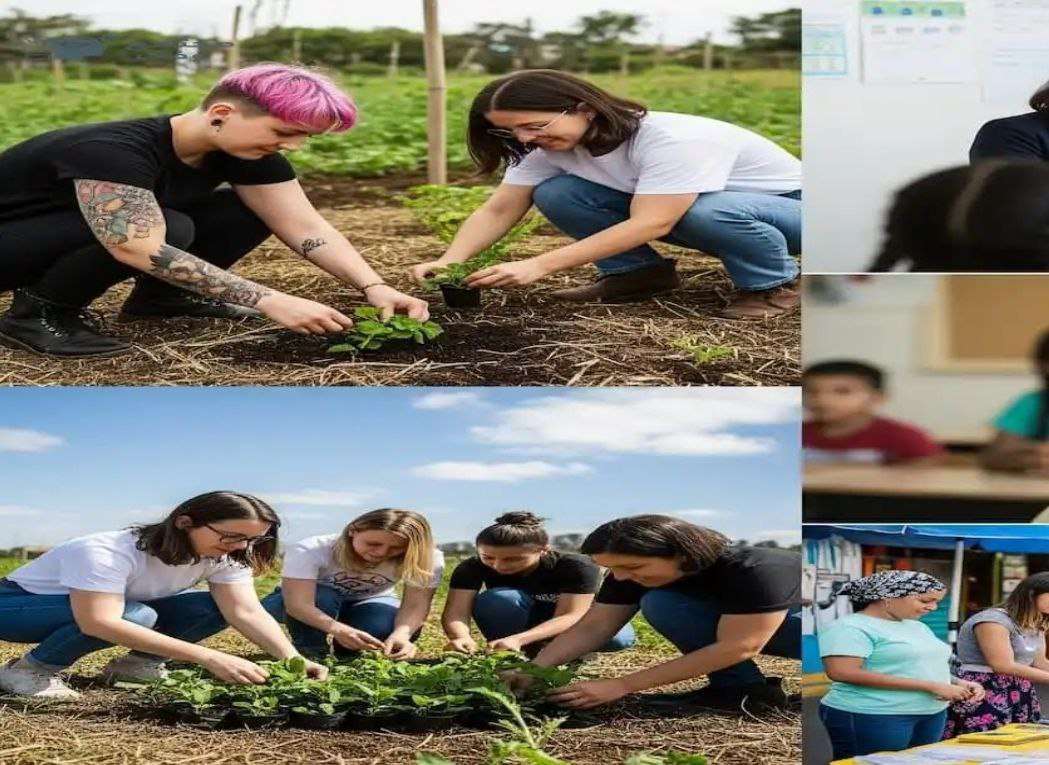
Women’s Empowerment as a Fundamental Element in Sustainable Development
by M.M. Dima Diaa Aziz
Women’s empowerment is a fundamental pillar in the framework of sustainable development, transcending its status as a moral obligation to become a strategic necessity for achieving environmental and economic balance. This academic article examines the role of women in the sustainability of societies, drawing on research published in leading international scientific journals specializing in sustainability, the humanities, and medicine.
Abstract:
Scientific data demonstrates that women’s empowerment directly contributes to improving the efficiency of natural resource management and reducing carbon emissions. Studies have proven that societies that grant women equal access to education and leadership exhibit greater resilience in the face of climate crises and demonstrate superior performance in health indicators and inclusive economic growth. The article concludes that the gender gap is a technical obstacle that hinders the achievement of the required operational efficiency in global development plans.
- Scientific Background and Basic Mechanisms
1.1 The Concept of Empowerment as a Functional Tool
In the developmental context, empowerment is defined as the process of enhancing an individual’s ability to make strategic decisions that impact environmental and social outcomes. Behavioral studies indicate a direct correlation between women’s empowerment and environmental awareness. Women are statistically more likely to adopt consumption choices with a lower carbon footprint [1].
1.2 Human and Physiological Development
Empowering women in the health and education sectors leads to improved “human capital.” In sustainable societies, educated women contribute to lower mortality rates and improved family nutrition, reducing the burden on national health systems and promoting the physiological sustainability of future generations [3].
- Empowering Women to Address Climate Challenges
Specialized research in climate science has demonstrated that women’s participation in environmental decision-making leads to more sustainable outcomes:
Political and Environmental Leadership: Statistics indicate that countries with strong female representation in parliaments tend to ratify stricter environmental treaties, contributing to significant reductions in national emissions [2].
Food Security and Agriculture: In sustainable agricultural sectors, granting women farmers equal access to land and modern technologies increases productivity by up to 30%, enhancing global food security and reducing resource depletion [4].
- Comparative Analysis: Scientific Agreement and Disagreement
Points of Agreement: Reference studies in the fields of clinical medicine and urban sustainability concur that women’s empowerment is the strongest driver for improving quality of life and reducing extreme poverty levels [3, 5].
Points of Disagreement: Discussions arise regarding the “nature of environmental behavior.” While some researchers believe that women possess an innate tendency to protect resources, other research in behavioral sciences argues that this behavior is a product of imposed social roles, meaning that true sustainability requires a complete transformation of social paradigms, not just reliance on “women’s responsibility” [1, 4].
- Simplified Interpretation of the Findings
Simply put, when women have access to education, employment, and decision-making power, society gains a new “managerial mind” that is inherently inclined to invest in the long term in health, education, and the environment. Women’s empowerment is like upgrading society’s “operating system” to function at full capacity instead of half, making the development process faster and more stable.
- Scientific Limitations and Research Gaps
Academic reviews have identified several challenges in this area:
Data Gap: There is a severe lack of gender-disaggregated data in rural and developing regions, making it difficult to measure the actual impact of women’s empowerment in the informal economy [5].
Structural Barriers: Many studies lack an in-depth analysis of how discriminatory laws hinder women-led sustainable technological solutions [2].
- Conclusion and Future Research Directions
Women’s empowerment is an essential functional component of sustainable development. Global environmental goals cannot be achieved without gender equality. Future research should focus on “women-led green innovation” and how artificial intelligence can be integrated to empower women in marginalized communities to lead renewable energy projects [1].
Mavisakalyan, A., & Tarverdi, Y. (2019). Gender and climate change policies: Do female representatives make a difference? Climate Change Economics. Source Link
Agarwal, B. (2020). Gender equality, food security and sustainable systems. Food Science Journal. Source Link
The Health & Sustainability Commission. (2022). Women’s leadership in clinical and community resilience. Medicine and Global Health. Source Link
Sustainability Editorial Board. (2023). Why gender parity is a prerequisite for environmental goals. Sustainability Science. Source Link
Social Behavioral Review. (2021). Empowering women for systemic change in conservation. Human Behaviour Studies. Source Link