
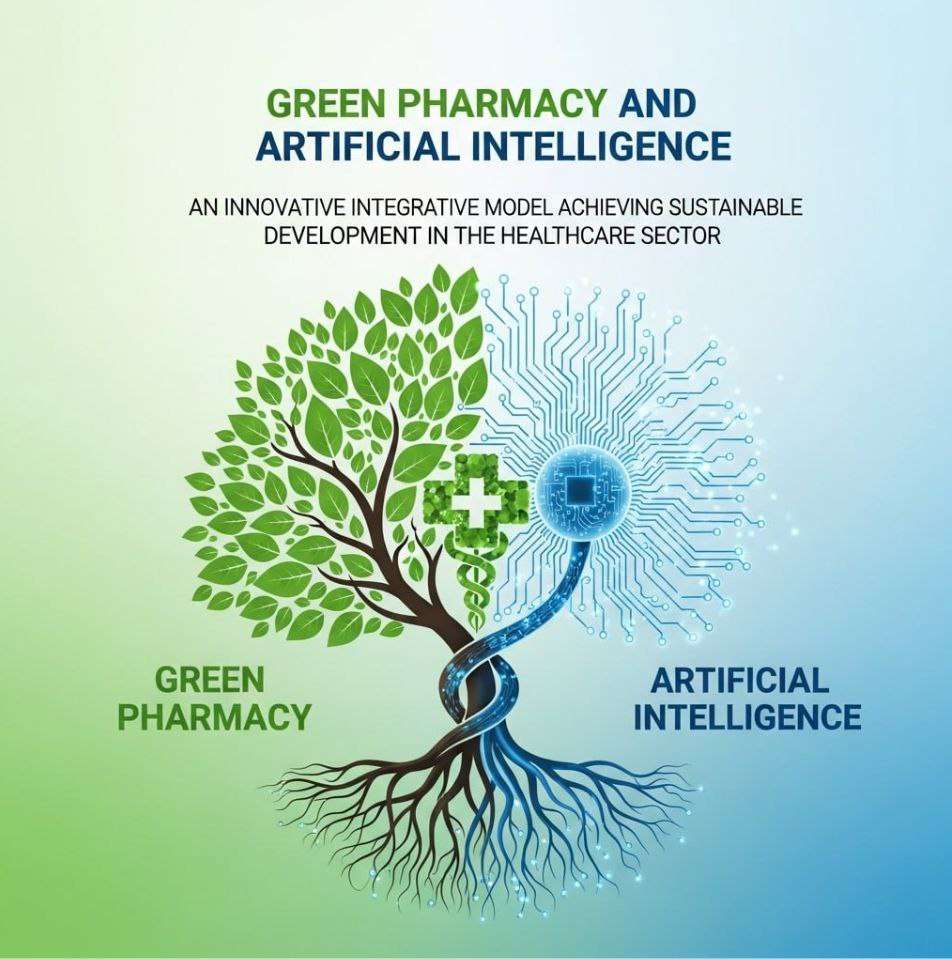
Green Pharmacy andArtificial Intelligence
Assistant Professor Noor Hadi Farhan
An Innovative Integrated Model for Achieving Sustainable Development in the Healthcare Sector
By Assistant Lecturer Noor Hadi Farhan
Sustainable development has been become a strategic priority in global health policies, particularly by considering escalating environmental challenges, rising the healthcare costs, and rapid innovating technology. Green pharmacy as a modern approach aimed to minimize the environmental impact of medicines throughout lifecycle, from designing and manufacturing to the usage and disposal. Simultaneously. Therefore, artificial intelligence had been revolutionizing the drug research, health data analysis, and the clinical decision making. It aimed to find a new integrated scientific perspective that combines green pharmacy and artificial intelligence as two fundamental pillars for achieving sustainable development in healthcare and pharmaceutical sciences. It also highlights the pivotal role of pharmacists in this transformation, discussing practical applications, ethical and regulatory challenges, and prospects in line with the United Nations Sustainable Development Goals.
A new integrated scientific perspective showed that combined the green pharmacy and artificial intelligence as a two fundamental pillars for achieving the sustainable development in pharmaceutical sciences and health care. The global healthcare sector undergoes radical transformations due to the increasing convergence of scientific advancements and challenges. Furthermore, the expansion of industrial pharmacy has significant improvement of human health. In addition, it has also exacerbation of environmental pressures, including the chemical pollution, consumption of non-renewable resources, and the emergence of pharmaceutical pollutants in aquatic ecosystems.
The concept of green pharmacy has emerged as a scientific and ethical response aimed at redesigning pharmaceutical practices to balance therapeutic efficacy with environmental sustainability. Simultaneously, artificial intelligence (AI) has provided advanced analytical and predictive tools capable of reshaping pharmaceutical research and development and enhancing the efficiency of healthcare systems.
A fundamental premise of systematic integration for green pharmacy and AI has represented a promising model for developing healthcare, rather than a temporary technological convergence.
Green Pharmacy: The Conceptual Framework with Practical Dimensions
Green pharmacy is an applicable branch of the green chemistry that focused on design, manufacture, and the usage of medicines in ways that minimizing the environmental and health risks with maintaining the quality and therapeutic efficacy. This encompasses the entire drug lifecycle, from molecular design to post-use disposal.
Basic Principles of Green Pharmacy
Green pharmacy is based on several fundamental principles, including:
- Reducing the use of toxic solvents and hazardous materials in drug manufacturing.
- Designing biodegradable and environmentally friendly drugs.
- Improving the efficiency of chemical reactions and minimizing waste.
- Using renewable energy sources in drug production.
- Reducing drug contamination after drug use.
The Environmental Impact of Traditional Medicines
Recent studies have shown that drug waste, such as antibiotics and hormones, can negatively impact ecosystems and contribute to antimicrobial resistance. These findings underscore the urgent need to transition to green pharmacy as a critical necessity for public health and the environment.
Artificial Intelligence in Pharmaceutical Sciences
Artificial intelligence refers to computer systems capable of mimicking human cognitive functions, such as learning, reasoning, and prediction. In pharmaceutical sciences, artificial intelligence is applied in:
- Drug discovery and molecular design.
- Predicting drug toxicity and efficacy.
- Improving clinical trials.
- Analysing genomic and pharmacogenomic data
.Artificial Intelligence and Accelerating Drug Discovery
Artificial intelligence significantly reduces the time and cost required for drug development by using predictive models capable of virtually screening thousands of compounds. This approach reduces reliance on resource-intensive and environmentally damaging laboratory experiments.
Integrating Green Pharmaceuticals and Artificial Intelligence
Artificial Intelligence as a Tool for Sustainability
Artificial intelligence enables:
- Predicting the environmental impact of drug molecules before manufacturing.
- Selecting less polluting manufacturing pathways.
- Optimizing the use of raw materials and energy.
The Proposed Integrative Model
The proposed model is based on:
- Employing machine learning algorithms to design environmentally friendly drugs.
- Integrating product lifecycle assessment (LCA) in the early stages of drug development.
References:
Anastas PT, Warner JC. Green chemistry: theory and practice. Oxford University Press; 1998.
Clark JH. Green chemistry and the UN sustainable development goals. Green Chem. 2019;21(4):1093–1094.
Daughton CG. Pharmaceuticals in the environment: sources and consequences. Environ Toxicol Chem. 2016;35(4):823–835.
Denny JC, Collins FS. Precision medicine in 2030—seven ways to transform healthcare. Cell. 2021;184(6):1415–1419.
Esmaeilian B, Wang B, Lewis K. The future of pharmaceutical manufacturing with AI. J Clean Prod. 2020; 258:120592.
Gupta R, Srivastava D. AI-driven drug design: challenges and opportunities. Brief Bioinform. 2022;23(1): bbab471.
Hughes JP, et al. Principles of early drug discovery. Br J Pharmacol. 2011;162(6):1239–1249.
Jiménez-González C, et al. Key green engineering research areas for sustainable pharmaceutical manufacturing. Org Process Res Dev. 2011;15(4):900–911.
Kahn SD. Machine learning in chemistry: the impact of artificial intelligence. J Chem Inf Model. 2018;58(8):1511–1512.
Khetan SK, Collins TJ. Human pharmaceuticals in the aquatic environment. Environ Sci Technol. 2007;41(20):6440–6448.
Kralisch D, Ott D, Gericke D. Rules and benefits of life cycle assessment in green pharmaceutical manufacturing. Green Chem. 2015;17(1):123–145.
Kümmerer K, Clark JH. Green and sustainable pharmacy. Green Chem. 2016;18(1):1–4.
Kümmerer K. Sustainable chemistry: a future guiding principle. Angew Chem Int Ed. 2017;56(52):16420–16430.
Mak KK, Pichika MR. Artificial intelligence in drug development. Chem Biol Drug Des. 2019;93(4):565–577.
Mardis ER. The impact of AI on genomics and personalized medicine. Nature. 2017;550(7675):345–353.
Nasrullah A, et al. Artificial intelligence for sustainable pharmaceutical development. Sustainability. 2020;12(22):9480.
OECD. AI in the pharmaceutical sector. OECD Publishing; 2020.
Paul D, Sanap G, Shenoy S, Kalyane D, Kalia K, Tekade RK. Artificial intelligence in drug discovery and development. Drug Discov Today. 2021;26(1):80–93.
Ratti E, Trist DG. AI in drug discovery: back to the future. Drug Discov Today. 2001;6(5):226–228.
Rodrigues T, et al. AI-assisted medicinal chemistry. Nat Rev Chem. 2021;5(7):522–533.
Schneider P, Walters WP, Plowright AT, et al. Rethinking drug design in the AI era. Nat Rev Drug Discov. 2020;19(5):353–364.
Segler MHS, Preuss M, Waller MP. Planning chemical syntheses with deep neural networks. Nature. 2018;555(7698):604–610.
Sheldon RA. Metrics of green chemistry and sustainability. Chem Soc Rev. 2012;41(4):1437–1451.
Tong X, et al. Artificial intelligence in drug discovery. Drug Discov Today. 2021;26(4):1109–1118.
U.S. EPA. Green Chemistry Program Overview. Environmental Protection Agency; 2020.
United Nations. Transforming our world: the 2030 Agenda for Sustainable Development. UN; 2015.
Vamathevan J, et al. Applications of machine learning in drug discovery and development. Nat Rev Drug Discov. 2019;18(6):463–477.
WHO. Global strategy on digital health 2020–2025. World Health Organization; 2021.
WHO. Pharmaceuticals in drinking-water. World Health Organization; 2012.
Artificial intelligence significantly reduces the time and cost required for drug development by using predictive models capable of virtually screening thousands of compounds. This approach reduces reliance on resource-intensive and environmentally damaging laboratory experiments.
Integrating Green Pharmaceuticals and Artificial Intelligence
Artificial Intelligence as a Tool for Sustainability
Artificial intelligence enables:
- Predicting the environmental impact of drug molecules before manufacturing.
- Selecting less polluting manufacturing pathways.
- Optimizing the use of raw materials and energy.
The Proposed Integrative Model
The proposed model is based on:
- Employing machine learning algorithms to design environmentally friendly drugs.
- Integrating product lifecycle assessment (LCA) in the early stages of drug development.
References:
Anastas PT, Warner JC. Green chemistry: theory and practice. Oxford University Press; 1998.
Clark JH. Green chemistry and the UN sustainable development goals. Green Chem. 2019;21(4):1093–1094.
Daughton CG. Pharmaceuticals in the environment: sources and consequences. Environ Toxicol Chem. 2016;35(4):823–835.
Denny JC, Collins FS. Precision medicine in 2030—seven ways to transform healthcare. Cell. 2021;184(6):1415–1419.
Esmaeilian B, Wang B, Lewis K. The future of pharmaceutical manufacturing with AI. J Clean Prod. 2020; 258:120592.
Gupta R, Srivastava D. AI-driven drug design: challenges and opportunities. Brief Bioinform. 2022;23(1): bbab471.
Hughes JP, et al. Principles of early drug discovery. Br J Pharmacol. 2011;162(6):1239–1249.
Jiménez-González C, et al. Key green engineering research areas for sustainable pharmaceutical manufacturing. Org Process Res Dev. 2011;15(4):900–911.
Kahn SD. Machine learning in chemistry: the impact of artificial intelligence. J Chem Inf Model. 2018;58(8):1511–1512.
Khetan SK, Collins TJ. Human pharmaceuticals in the aquatic environment. Environ Sci Technol. 2007;41(20):6440–6448.
Kralisch D, Ott D, Gericke D. Rules and benefits of life cycle assessment in green pharmaceutical manufacturing. Green Chem. 2015;17(1):123–145.
Kümmerer K, Clark JH. Green and sustainable pharmacy. Green Chem. 2016;18(1):1–4.
Kümmerer K. Sustainable chemistry: a future guiding principle. Angew Chem Int Ed. 2017;56(52):16420–16430.
Mak KK, Pichika MR. Artificial intelligence in drug development. Chem Biol Drug Des. 2019;93(4):565–577.
Mardis ER. The impact of AI on genomics and personalized medicine. Nature. 2017;550(7675):345–353.
Nasrullah A, et al. Artificial intelligence for sustainable pharmaceutical development. Sustainability. 2020;12(22):9480.
OECD. AI in the pharmaceutical sector. OECD Publishing; 2020.
Paul D, Sanap G, Shenoy S, Kalyane D, Kalia K, Tekade RK. Artificial intelligence in drug discovery and development. Drug Discov Today. 2021;26(1):80–93.
Ratti E, Trist DG. AI in drug discovery: back to the future. Drug Discov Today. 2001;6(5):226–228.
Rodrigues T, et al. AI-assisted medicinal chemistry. Nat Rev Chem. 2021;5(7):522–533.
Schneider P, Walters WP, Plowright AT, et al. Rethinking drug design in the AI era. Nat Rev Drug Discov. 2020;19(5):353–364.
Segler MHS, Preuss M, Waller MP. Planning chemical syntheses with deep neural networks. Nature. 2018;555(7698):604–610.
Sheldon RA. Metrics of green chemistry and sustainability. Chem Soc Rev. 2012;41(4):1437–1451.
Tong X, et al. Artificial intelligence in drug discovery. Drug Discov Today. 2021;26(4):1109–1118.
U.S. EPA. Green Chemistry Program Overview. Environmental Protection Agency; 2020.
United Nations. Transforming our world: the 2030 Agenda for Sustainable Development. UN; 2015.
Vamathevan J, et al. Applications of machine learning in drug discovery and development. Nat Rev Drug Discov. 2019;18(6):463–477.
WHO. Global strategy on digital health 2020–2025. World Health Organization; 2021.
WHO. Pharmaceuticals in drinking-water. World Health Organization; 2012.
Zhavoronkov A, et al. Deep learning enables rapid identification of potent drug candidates. Nat Biotechnol. 2019;37(9):1038–1040.