
Sustainability as a Tool for Preventing Chronic Diseases
M.M. Zahraa Saad Hatif
Executive Summary
Recent research published in Nature journals demonstrates that sustainability represents a comprehensive preventive framework for addressing the growing burden of chronic diseases. By improving diets, reducing harmful environmental exposures, and reorienting healthcare systems toward prevention, the risk of heart disease, diabetes, and some cancers can be reduced. This article aims to discuss the scientific basis for this preventive role, comparing the results of recent studies and highlighting research limitations and future directions.
Sustainability and Public Health: The Conceptual Framework
Chronic diseases are among the most prominent global health challenges, linked to long-term risk factors including unhealthy lifestyles, environmental degradation, and climate change. In this context, the concept of sustainability has emerged as an approach that links human health with the health of ecosystems, known in the scientific literature as “planetary health.” Studies published in Nature Medicine indicate that environmental degradation, air pollution, and climate change not only affect the health of ecosystems but also contribute to increased chronic inflammation and metabolic dysfunction, both key factors in the development of non-communicable diseases. Therefore, adopting sustainable policies in food, energy, and transportation can be a broad-based preventive intervention that extends beyond traditional medical treatment.
(Furman et al., 2019; Whitmee et al., 2015; Achebak et al., 2024)
Food Sustainability and Its Role in Preventing Chronic Diseases
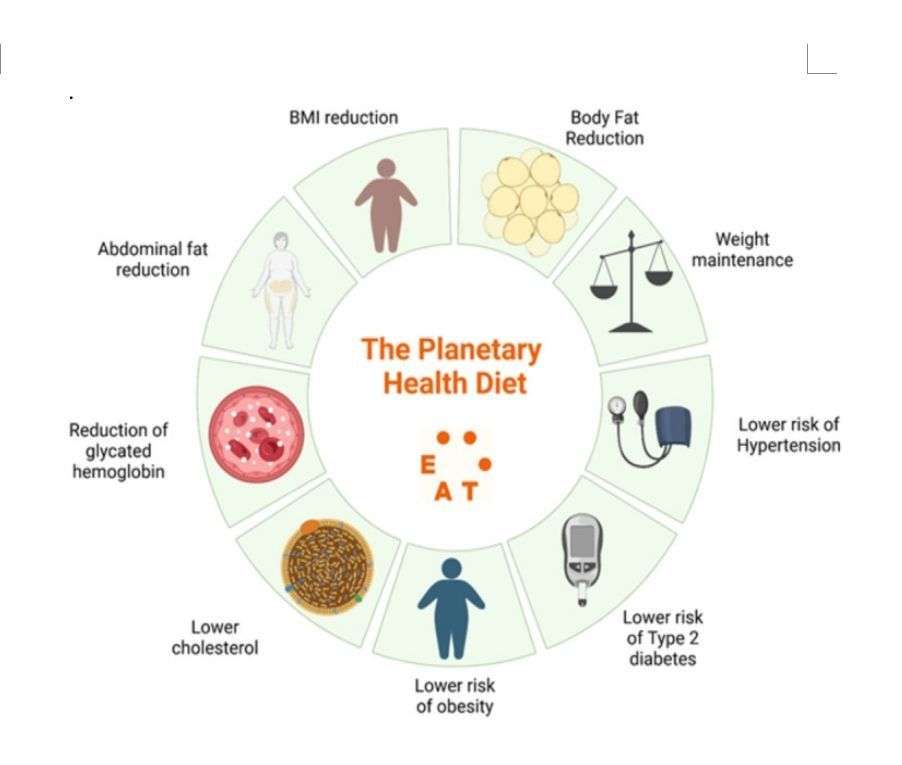
Growing scientific evidence suggests that sustainable dietary patterns play a pivotal role in preventing chronic diseases. Studies published in Nature Medicine have shown that adherence to diets rich in vegetables, fruits, whole grains, and legumes, while reducing ultra-processed foods, is associated with a significant reduction in the risk of heart disease and type 2 diabetes, and promotes healthy aging. Extensive analyses in Nature Communications have shown that the impact of healthy dietary patterns varies depending on the type of chronic disease, with the benefits being more pronounced in cardiometabolic disorders compared to some neurological diseases. These findings confirm that dietary sustainability is not limited to reducing environmental impact but also directly intersects with biological mechanisms that reduce inflammation and improve insulin sensitivity.
(Tessier et al., 2025; Shang et al., 2023; Dehnavi et al., 2025)
Figure 1. Conceptual illustration of sustainable dietary patterns and their protective effect against chronic diseases through reducing inflammation and improving metabolic regulation.
Source: Figure prepared by the researcher based on results published in Nature Medicine and Nature Communications.
Environmental Sustainability and Reducing Chronic Risk Factors
Air pollution is one of the most significant environmental risk factors associated with chronic diseases, particularly heart and lung diseases. Studies in Nature Medicine indicate that long-term exposure to pollutants such as ozone and particulate matter is associated with increased mortality and cardiovascular disease rates. More recent research in Nature Communications has shown that air pollution can lead to molecular and proteolytic changes that reflect the activation of inflammatory pathways and oxidative stress, thus explaining the link between environmental exposure and the development of chronic diseases. Therefore, sustainable policies aimed at improving air quality and reducing emissions can be considered effective preventive tools that contribute to reducing the health burden at the population level.
(Achebak et al., 2024; Furman et al., 2019)
Figure 2. The biological mechanism linking exposure to air pollution to the development of chronic diseases through oxidative stress and chronic inflammation.
Source: Figure prepared by the researcher based on findings published in Nature Medicine and Nature Communications.
Sustainable Health Systems and Future Prevention
Sustainability in healthcare extends beyond the environmental dimension to include redesigning health systems to focus on prevention and waste reduction. Studies published in Nature Portfolio indicate that innovative care models, such as digital healthcare and the “hospital at home” model, can reduce resource consumption and improve the management of chronic diseases. Research published in Nature Food also confirms that reforming food systems and supply chains is a crucial part of sustainable prevention, as individual health cannot be separated from the food environment surrounding them. Despite these advances, research gaps remain regarding causality and applicability in low-income settings, necessitating further long-term intervention studies.
(Powell et al., 2024; Scapin et al., 2025; Whitmee et al., 2015).
References
Achebak, H. et al. (2024) Geographic sources of ozone air pollution and mortality, Nature Medicine.
Dehnavi, M.K. et al. (2025) Adherence to the planetary health diet, Scientific Reports.
Furman, D. et al. (2019) Chronic inflammation in the etiology of disease, Nature Medicine.
Powell, D. et al. (2024) Hospital at Home and sustainable healthcare, npj Digital Medicine.
Scapin, T. et al. (2025) Global food retail environments, Nature Food.
Shang, X. et al. (2023) Healthy dietary patterns and chronic disease risk, Nature Communications.
Tessier, A.J. et al. (2025) Optimal dietary patterns for healthy aging, Nature Medicine.
Whitmee, S. et al. (2015) Safeguarding human health in the Anthropocene, Nature.
Authors (2026) Plasma proteome mediates air pollution and health, Nature Communications.
Additional Nature Portfolio reviews on planetary health and sustainability.