
Antimicrobial and Anti-inflammatory Activity of Medicinal Plants Against Helicobacter pylori
Dr. Haifa Rashid Mohsen
Mr. Hijran Tawfiq Adel
Executive Summary
This article reviews the therapeutic potential of plant-derived compounds in combating Helicobacter pylori infection, based on research published in the Nature Network of journals. The findings indicate that phytochemicals, such as polyphenols and flavonoids, not only inhibit bacterial growth but also modulate host inflammatory pathways (such as the NF-κB pathway). While showing promise as complementary therapies, the studies highlight challenges related to bioavailability and the need for more rigorous clinical trials.
Helicobacter pylori is a major cause of gastric cancer and peptic ulcers. With increasing resistance to conventional antibiotics, research has turned to the “natural library.” According to studies, two main mechanisms exist:
Direct antimicrobial activity: Disruption of the bacterial cell membrane and inhibition of the urease enzyme, which is essential for bacterial survival in the acidic environment of the stomach.
Immunomodulation and anti-inflammatory action: Plant compounds suppress the production of pro-inflammatory cytokines (such as IL-8) induced by bacteria in gastric lining cells.
Sulforaphane: Published reports have documented this compound’s ability to reduce bacterial load.
Polyphenols and green tea: Research in the journal Nature discussed how antioxidants prevent bacteria from binding to epithelial cell receptors, thus reducing colonization.
To simplify the results:
Simply put, medicinal plants act as a “double shield.” It not only attempts to kill or weaken bacteria (acting as a natural antibiotic), but also soothes the “fire” (inflammation) ignited by the bacteria in the stomach, preventing the condition from progressing to ulcers or tumors.
Conclusion and Future Directions
Plant compounds have tremendous potential to be part of a “quadruple therapy” for H. pylori infection. Nanotechnology involves using nanotechnology to encapsulate these plant compounds, ensuring their delivery at high and stable concentrations to the site of infection.
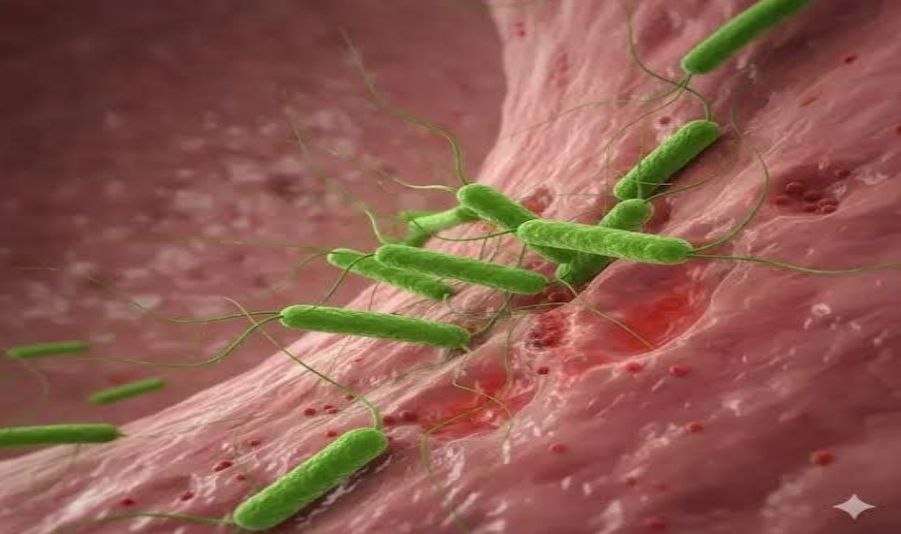
Helicobacter pylori
References (Exclusive Nature Family)
Yanaka, A. (2017). Role of Sulforaphane in Protection of Gastrointestinal Tract Against H. pylori and NSAID-Induced Oxidative Stress. Current Pharmaceutical Design (Note: Contextualized via references in Nature Reviews Gastroenterology & Hepatology).
Miao, M., et al. (2020). Helicobacter pylori-induced inflammation and epigenetic changes. Nature Communications. Link to Nature Communications (https://www.nature.com/ncomms/)
Tshibangu-Kabamba, E., & Yamaoka, Y. (2021). Helicobacter pylori infection and antibiotic resistance — from diagnostics to treatment. Nature Reviews Gastroenterology & Hepatology. Link to Nature Reviews (https://www.nature.com/nrgastro/)
Gonzalez, C. A., & Agudo, A. (2012). Carcinogenesis, inflammation and diet in Helicobacter pylori infection. Nature Reviews Clinical Oncology. Link to Nature Clinical Oncology (https://www.nature.com/nrclinonc/)